Demand generation is often reduced to lead generation: campaigns, forms and a push for pipeline. For a complex product, it is the slower work of shaping how a market understands a problem before anyone is ready to buy.
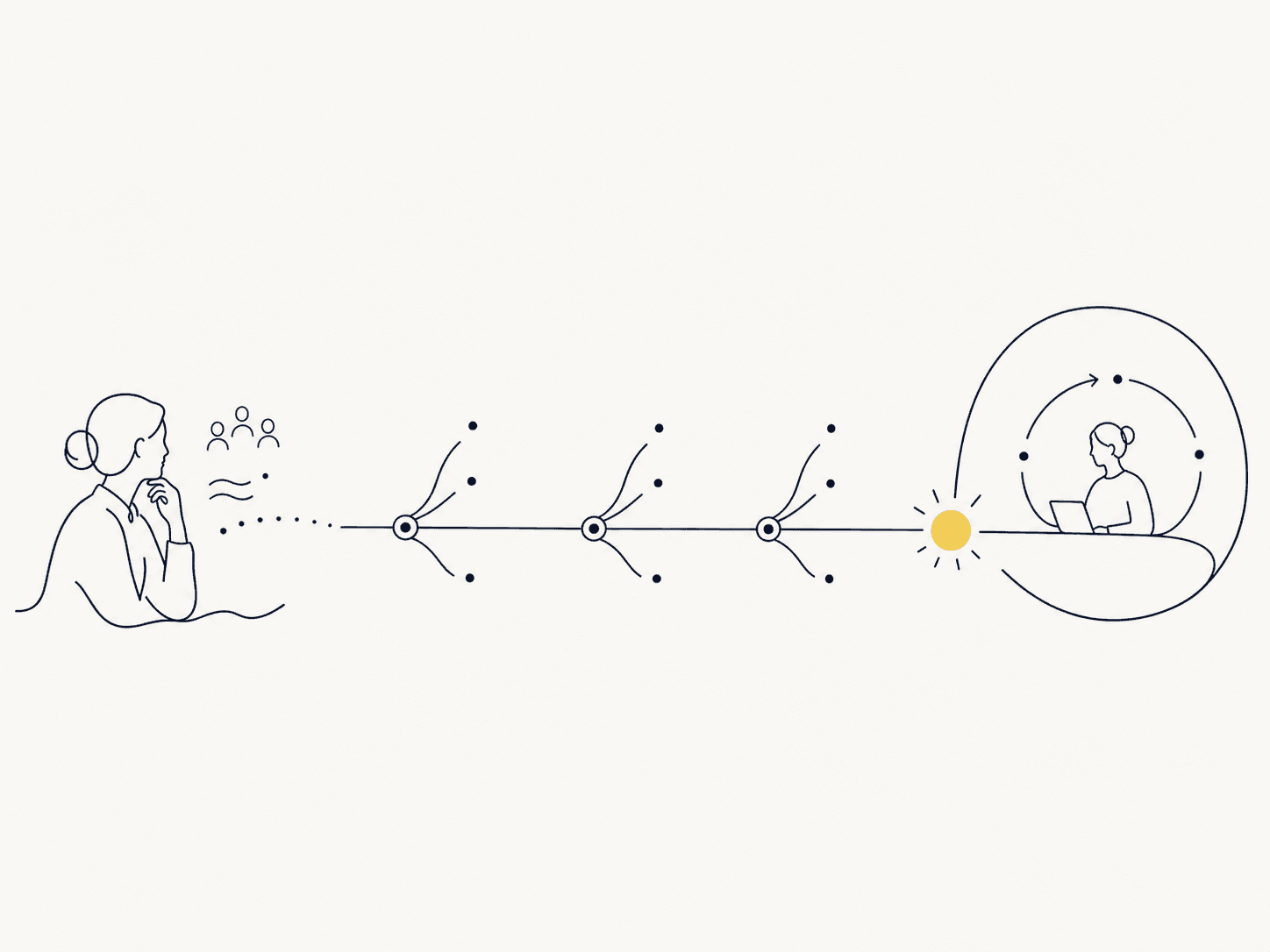
Lead generation reaches people who are in-market now. Demand generation reaches the people who will be in-market later and helps shape three things:
- what they believe the problem is;
- what a good solution looks like;
- which questions they will ask.
The timing is the point. If education starts when the pipeline is already needed, it has started too late. The work runs on a horizon of months, and it competes with tactics that show signals immediately.
This does not replace acquisition. It makes later acquisition more efficient by giving buyers a frame they already understand when Sales reaches them.